
 Image 1 of 4
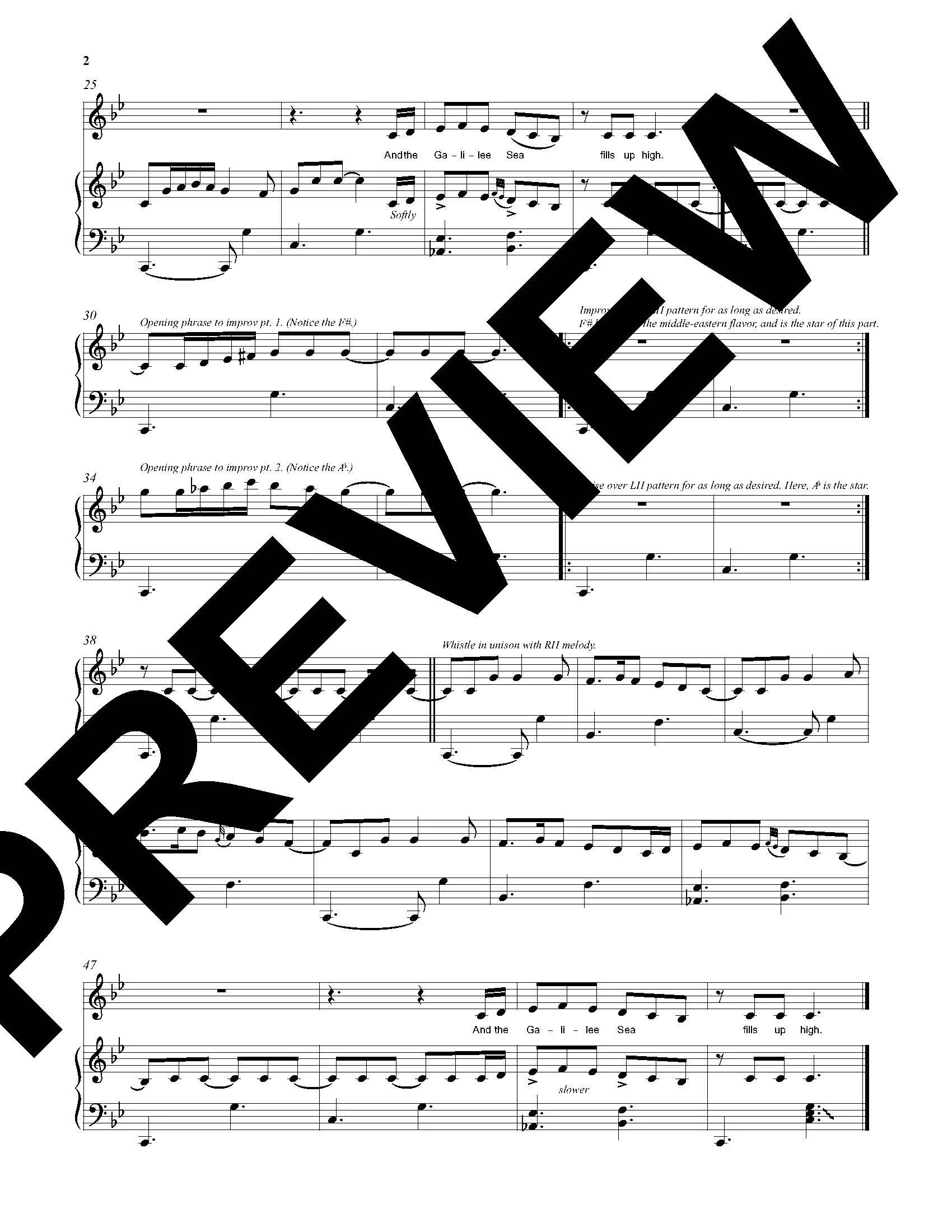 Image 2 of 4
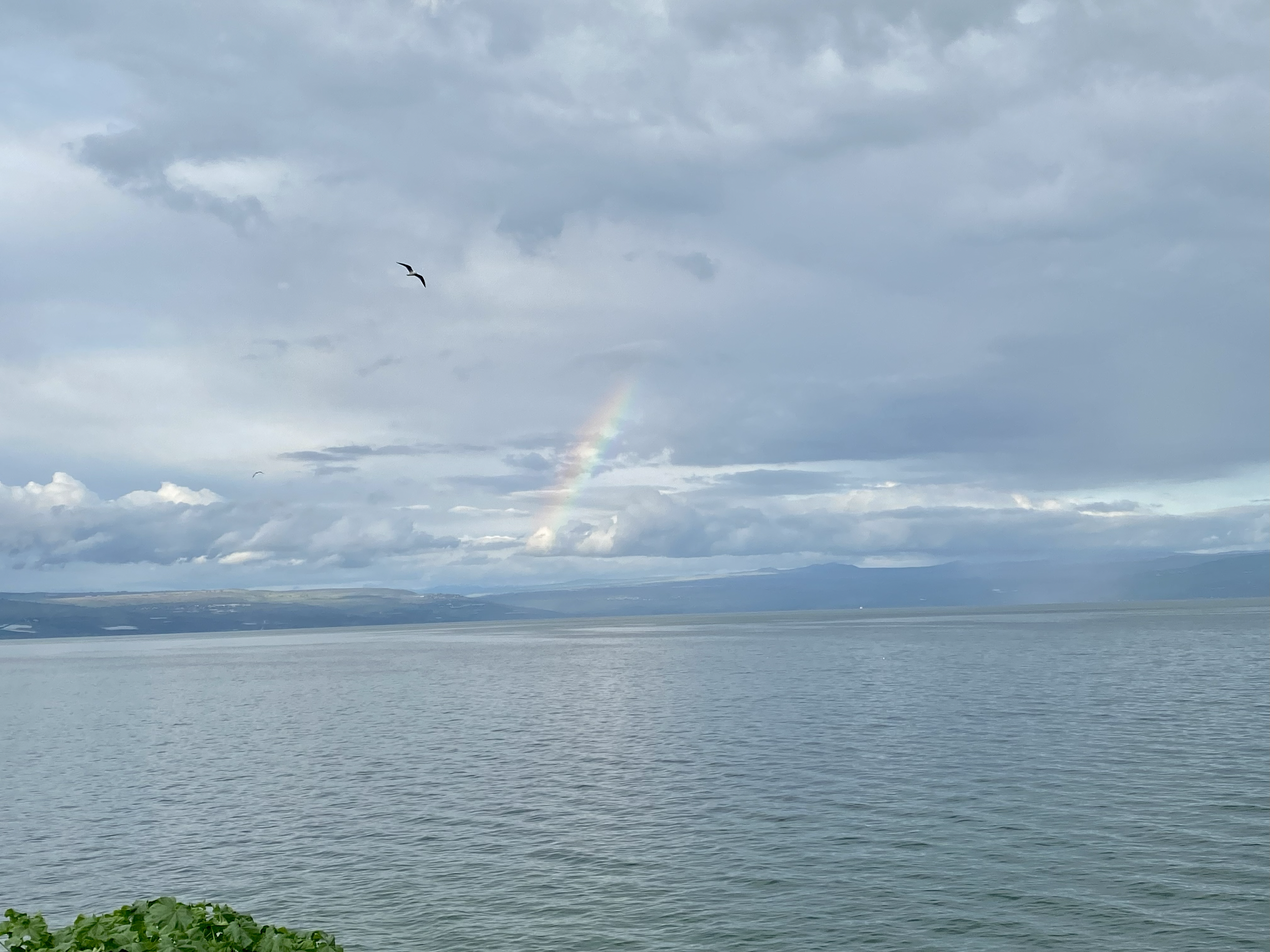 Image 3 of 4
 Image 4 of 4
The Galilee Sea - Original Song - Sheet Music
The Galilee Sea
Original song by Simcha Tzuf
In the magical Dorian Mode
PDF SHEEET MUSIC DOWNLOAD
At the heart of winter, when all is cold, frozen, and grey, a new life begins to breathe, a new heart begins to pulse, the Almond tree begins to flower.
In Israel the Flowering Almond tree is a celebration that happens right in the heart of winter. It signifies the spark of light and life which begins amidst the darkness. Just when everything seems to stop, when the trees are bare and lifeless, beautiful almond flowers begin to grow and blossom. Children sing songs about it in schools, and the native landscapes are adorned with beautiful white flowering almond trees.
However the real star of this song is the Sea of the Galilee. The Galilee Sea holds a special place in the heart of many around the world. It is the biggest body of water in Israel (other than the Mediterranean Sea) and is a shared historical monument to both Christians and Jews. People come from around the world to bathe in its waters, and for many it is a spiritual place.
Since we only get rain during the winter season in the middle-east, there are some years where the Galilee Sea doesn’t fill up so well, and she becomes partially sick, which is a saddening thing to see. This year (2024-25) has been one of those years, with the Galilee Sea currently at a very low water level. This is devastating for many who live in or visit the region and has rebounding effects to many part of the ecological system.
This song is kind of a prayer of mine in song form that came blooming out this past winter, like an Almond Flower in the heart of frost. It is about the many things that are happening in Israel during the winter season as the Almond flowers, and mentions many of the beloved landmarks of the country, like the snow covered Chermon mountains (pronounced ‘ch’ as in Clasarch’), the frequent rainbows, and the turquoise water of the Sachne river (same ch pronunciation) which is warm year round. Oh and don’t forget about the little blue fishes that nibble your toes!
The theme of the song is found at the end of each verse, in the words ‘And the Galilee Sea fills up high’. These are words of hope and prayer for rain, and an overflowing Galilee Sea. Its almost like a shaman rain dance. When we play this song at our family band concerts, my wife plays a heartbeat rhythm on a shaman drum throughout the song, signifying the awakening beating of the heart of the tree amidst the winter frost, and the heartbeat of the universe pulsing together in unison with all of creation.
SONG NOTES:
- Tuning the Harp:
This tune is in the C Dorian Mode. If your harp is tuned in Eb major, that would mean raising only the A lever, and putting all other levers down.
However, since the left hand often plays the Ab major chord, I keep my lowest bass A Lever down (on a 34 string harp). Likewise I put my two highest A levers down too, for the improvisational part 2, where we go into C Aeolian mode.
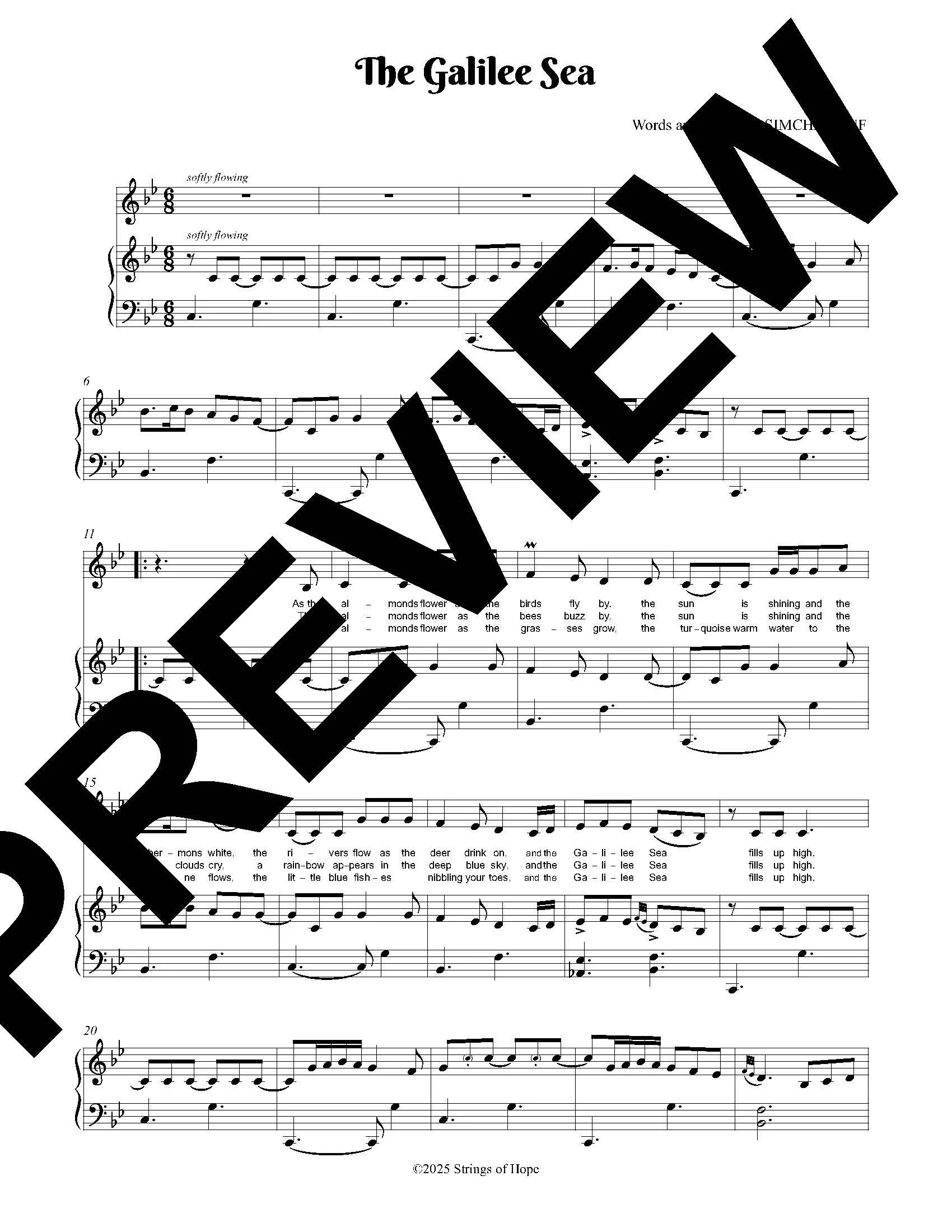
🎵 The Left Hand has a repeating alternating rhythmic pattern. I encourage you to study and learn the pattern part by heart so that you wont need to read each note of it as you play, and you can then focus on the melody (and lyrics if you’d like). It is a repetitive pattern, kind of like the heartbeat of the song.
🎵 Measure 22 has two ‘ghost notes’ with ‘()’ signs around them. These notes are barely played and are mainly there to keep the rhythmic flow. Let your thumb brush across the string in those instances.
Improvisational section built into the song:
I find it so important to add a personal touch to any music I’m playing, including my own :)
Which is why I added this improvisational section at the end of the song. Here you can explore and make the song your own.
🎵 There is a two part improvisational section at the end of the song which introduces two alternate modes into the song. The first section begins an upward climb up the scale, and adds an F# note on the way, turning the C Dorian Mode into a Dorian 4# (known as the Ukrainian Dorain, the Arabic Nikriz, and some other interesting names). This Mode sounds very middle-eastern and adds that flavor so needed for a song based in the roots of this country. Continue this climbing journey up the scale, improvising as you go until you get to the top octaves where the A strings are tuned to Ab. This then brings us into the second improvisational section.
🎵 The second Improvisational section introduces the C Aeolian Mode (the natural minor).
I play this part in my upper two octaves where I set those A levers flat at the beginning of the song, as they’re not really used at any other time in the song. (Don’t forget to put the F# lever back down as you go up to the second part). Once we reach these top octaves, the Ab note becomes the new star of the show. Let it sing out in all its Aeolian glory. It's a great place to let the sad and broken hearted side of our hearts express themselves.
Journey around this mode in those upper octaves, all the while as your left hand is keeping up that ostinato, and then when you’re ready to return to the song, slowly journey back down (remembering to lower that F# lever if you haven't done so already) and into the next part of the song.
In the sheet music you will find a two measure intro to each improv section, which is then followed by an ostinato repetitive left hand loop that you can continue improvising over until you’re ready to move over to the next section.
I offer an opening musical phrase I like playing as I go into each improv part. It takes that new lever change note, and lets it bloom and shine its unique character. But the melody notes written there are just my suggestion, feel free to take the improv part to any place your heart and fingers find fit.
Enjoy playing the song and finding your own improvisational parts to it :)
Simcha
🌊🌈The picture above is a picture I took of the Galilee Sea one day during the time this song was born in the heart of winter. It was a beautiful winter day, and this magical rainbow appeared out of the blue (it’s part of what inspired the rainbow verse in the second paragraph of the song):
The Galilee Sea
Original song by Simcha Tzuf
In the magical Dorian Mode
PDF SHEEET MUSIC DOWNLOAD
At the heart of winter, when all is cold, frozen, and grey, a new life begins to breathe, a new heart begins to pulse, the Almond tree begins to flower.
In Israel the Flowering Almond tree is a celebration that happens right in the heart of winter. It signifies the spark of light and life which begins amidst the darkness. Just when everything seems to stop, when the trees are bare and lifeless, beautiful almond flowers begin to grow and blossom. Children sing songs about it in schools, and the native landscapes are adorned with beautiful white flowering almond trees.
However the real star of this song is the Sea of the Galilee. The Galilee Sea holds a special place in the heart of many around the world. It is the biggest body of water in Israel (other than the Mediterranean Sea) and is a shared historical monument to both Christians and Jews. People come from around the world to bathe in its waters, and for many it is a spiritual place.
Since we only get rain during the winter season in the middle-east, there are some years where the Galilee Sea doesn’t fill up so well, and she becomes partially sick, which is a saddening thing to see. This year (2024-25) has been one of those years, with the Galilee Sea currently at a very low water level. This is devastating for many who live in or visit the region and has rebounding effects to many part of the ecological system.
This song is kind of a prayer of mine in song form that came blooming out this past winter, like an Almond Flower in the heart of frost. It is about the many things that are happening in Israel during the winter season as the Almond flowers, and mentions many of the beloved landmarks of the country, like the snow covered Chermon mountains (pronounced ‘ch’ as in Clasarch’), the frequent rainbows, and the turquoise water of the Sachne river (same ch pronunciation) which is warm year round. Oh and don’t forget about the little blue fishes that nibble your toes!
The theme of the song is found at the end of each verse, in the words ‘And the Galilee Sea fills up high’. These are words of hope and prayer for rain, and an overflowing Galilee Sea. Its almost like a shaman rain dance. When we play this song at our family band concerts, my wife plays a heartbeat rhythm on a shaman drum throughout the song, signifying the awakening beating of the heart of the tree amidst the winter frost, and the heartbeat of the universe pulsing together in unison with all of creation.
SONG NOTES:
- Tuning the Harp:
This tune is in the C Dorian Mode. If your harp is tuned in Eb major, that would mean raising only the A lever, and putting all other levers down.
However, since the left hand often plays the Ab major chord, I keep my lowest bass A Lever down (on a 34 string harp). Likewise I put my two highest A levers down too, for the improvisational part 2, where we go into C Aeolian mode.
🎵 The Left Hand has a repeating alternating rhythmic pattern. I encourage you to study and learn the pattern part by heart so that you wont need to read each note of it as you play, and you can then focus on the melody (and lyrics if you’d like). It is a repetitive pattern, kind of like the heartbeat of the song.
🎵 Measure 22 has two ‘ghost notes’ with ‘()’ signs around them. These notes are barely played and are mainly there to keep the rhythmic flow. Let your thumb brush across the string in those instances.
Improvisational section built into the song:
I find it so important to add a personal touch to any music I’m playing, including my own :)
Which is why I added this improvisational section at the end of the song. Here you can explore and make the song your own.
🎵 There is a two part improvisational section at the end of the song which introduces two alternate modes into the song. The first section begins an upward climb up the scale, and adds an F# note on the way, turning the C Dorian Mode into a Dorian 4# (known as the Ukrainian Dorain, the Arabic Nikriz, and some other interesting names). This Mode sounds very middle-eastern and adds that flavor so needed for a song based in the roots of this country. Continue this climbing journey up the scale, improvising as you go until you get to the top octaves where the A strings are tuned to Ab. This then brings us into the second improvisational section.
🎵 The second Improvisational section introduces the C Aeolian Mode (the natural minor).
I play this part in my upper two octaves where I set those A levers flat at the beginning of the song, as they’re not really used at any other time in the song. (Don’t forget to put the F# lever back down as you go up to the second part). Once we reach these top octaves, the Ab note becomes the new star of the show. Let it sing out in all its Aeolian glory. It's a great place to let the sad and broken hearted side of our hearts express themselves.
Journey around this mode in those upper octaves, all the while as your left hand is keeping up that ostinato, and then when you’re ready to return to the song, slowly journey back down (remembering to lower that F# lever if you haven't done so already) and into the next part of the song.
In the sheet music you will find a two measure intro to each improv section, which is then followed by an ostinato repetitive left hand loop that you can continue improvising over until you’re ready to move over to the next section.
I offer an opening musical phrase I like playing as I go into each improv part. It takes that new lever change note, and lets it bloom and shine its unique character. But the melody notes written there are just my suggestion, feel free to take the improv part to any place your heart and fingers find fit.
Enjoy playing the song and finding your own improvisational parts to it :)
Simcha
🌊🌈The picture above is a picture I took of the Galilee Sea one day during the time this song was born in the heart of winter. It was a beautiful winter day, and this magical rainbow appeared out of the blue (it’s part of what inspired the rainbow verse in the second paragraph of the song):